Competitive analysis that improves discovery
Create a sourced comparison that includes doing nothing and building internally.
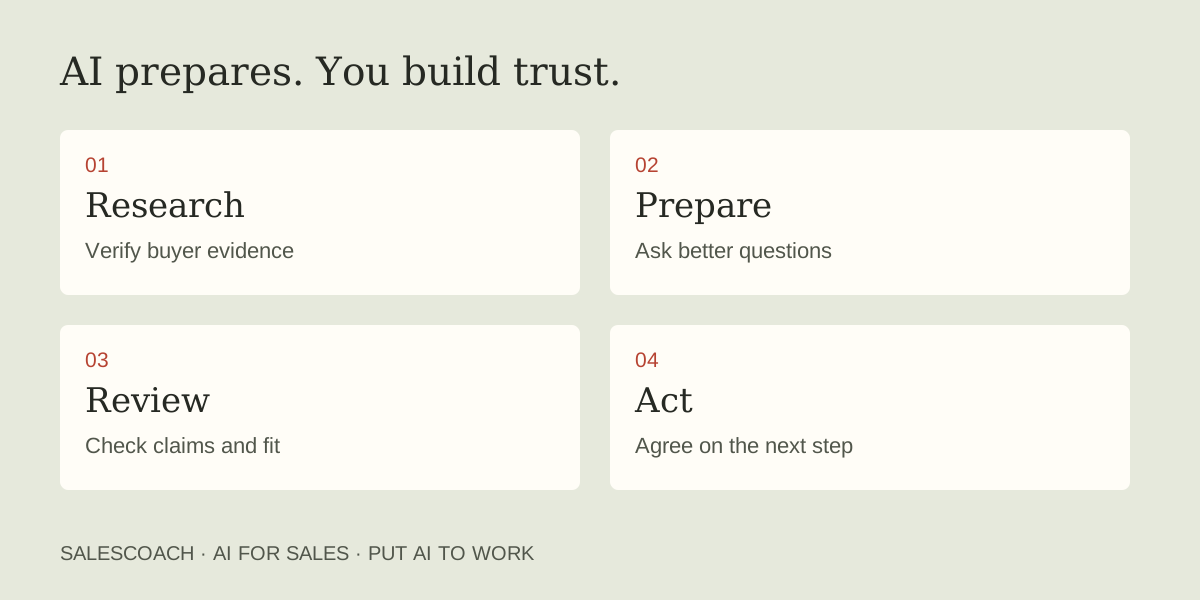
Work through the steps
- Identify the alternatives buyers actually mention in calls. Include direct competitors, spreadsheets, internal teams, and the status quo.
- Collect dated public evidence for features, implementation requirements, pricing terms, and support. Have AI summarize only those sources and flag anything it cannot establish.
- Compare alternatives against buyer criteria rather than declaring a universal winner. Build questions that reveal priorities, switching costs, and trade-offs.
- Have the product or sales owner verify the battlecard. Avoid unsupported superiority claims and refresh time-sensitive details before a proposal.
In practice
If the buyer values implementation speed more than feature breadth, the useful question is what must be working by the deadline—not which product has the longest feature list.
A prompt to make your own
Replace the brackets with approved context. Ask the assistant to identify missing information before proceeding, and review its output against your sources.
Using these sources, make a comparison matrix for [buyer/job]. Columns: criterion, our evidence, alternative evidence, unknowns, and discovery question. Include the status quo. Cite the supplied source for every factual comparison and avoid declaring a winner without buyer priorities. Sources: [paste].
Your assignment
Create a one-page battlecard with five evidence-backed comparisons and three discovery questions.
What to measure
How often the battlecard clarifies a buyer decision; review win/loss reasons.