AI coaching, negotiation and forecasting
Use evidence to improve skill and pipeline judgment.
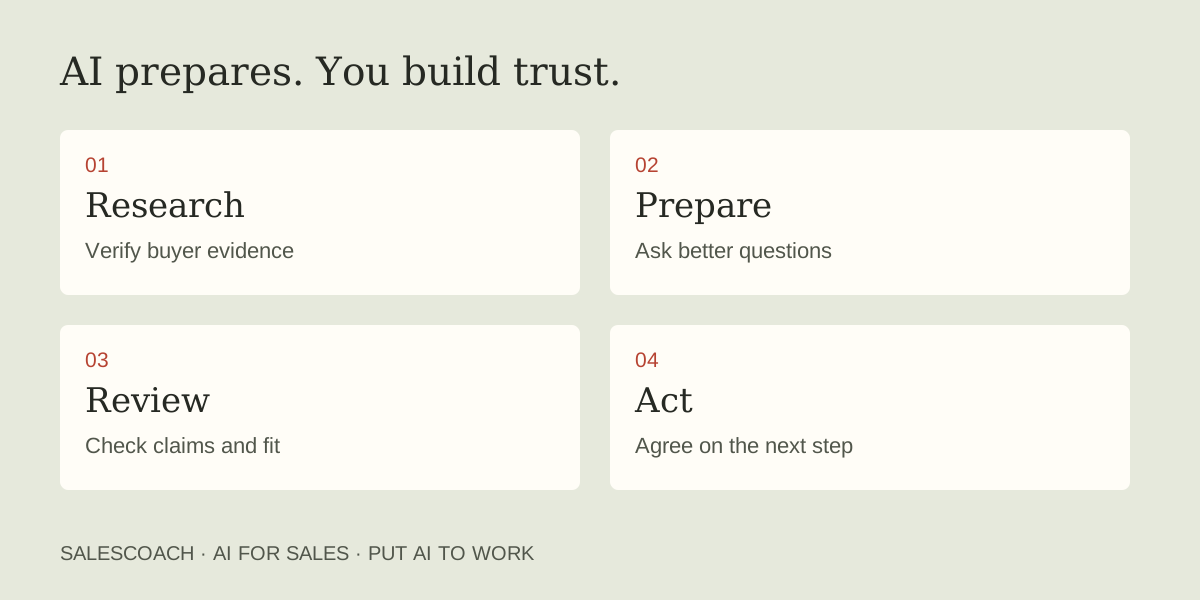
Work through the steps
- Choose a coaching rubric: discovery depth, listening, relevance, objection handling, and next-step clarity. With appropriate permission, review notes or recordings against the same rubric over time.
- Practice negotiation by defining your acceptable scope, commercial boundaries, and alternatives. Ask AI to challenge your proposal and identify concessions that should require an exchange of value.
- For pipeline review, use explicit stage definitions and observed progress. Separate committed revenue, plausible scenarios, and unknowns. A model’s confident language is not evidence that a deal will close.
- Compare forecasts with outcomes, review misses without blame, and update assumptions. Ask whether the next coaching exercise addresses a real pattern in the evidence.
In practice
A “90% likely” deal without a decision date or access to the approver deserves investigation. Ask what evidence supports the probability before including it in a commitment.
A prompt to make your own
Replace the brackets with approved context. Ask the assistant to identify missing information before proceeding, and review its output against your sources.
Review these anonymized deal notes against this rubric. Separate observed behavior, interpretation, and coaching suggestions. Identify the next skill to practice. Then create conservative, expected, and optimistic pipeline scenarios using only supplied probabilities and amounts; flag missing inputs. Notes/rubric: [paste].
Your assignment
Practice one negotiation and review five deals for missing evidence.
What to measure
Coaching rubric improvement, forecast error, and buyer-confirmed progress.