Proposal generation and business cases
Produce a clear, scoped proposal from confirmed discovery notes.
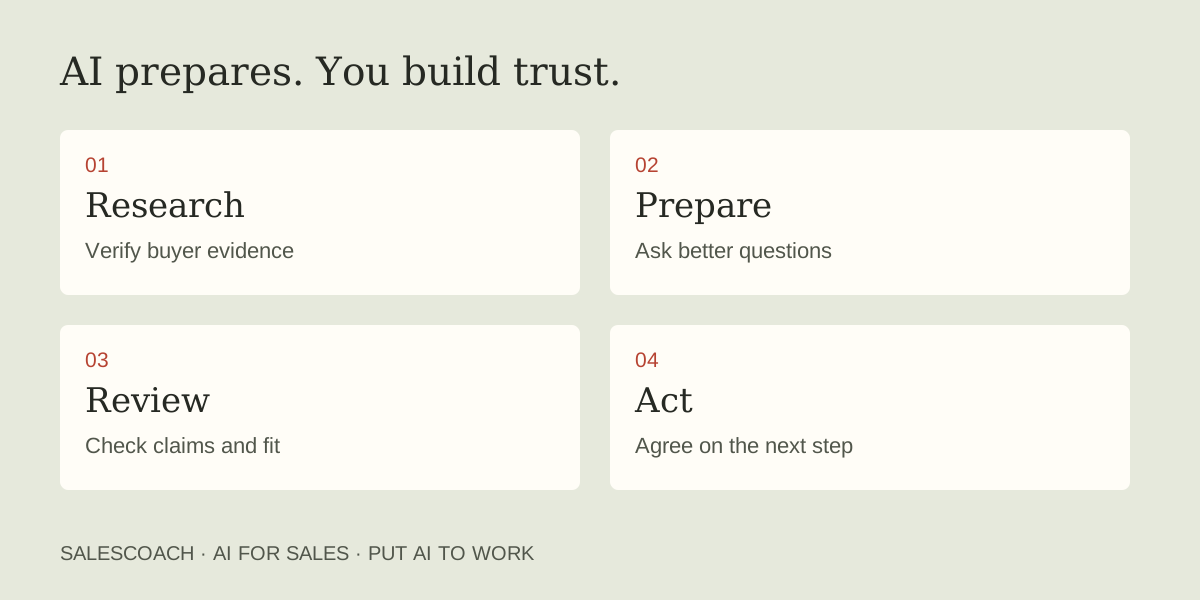
Work through the steps
- Collect the buyer’s goal, success measures, constraints, decision process, approved offer, pricing, and delivery capacity. List missing inputs before drafting.
- Ask AI to structure the proposal around the buyer’s problem, recommended scope, deliverables, exclusions, responsibilities, milestones, and decision needed.
- Build a transparent business case. Use buyer-validated baseline numbers, show formulas and assumptions, and present scenarios rather than guaranteed returns.
- Have the accountable owner verify scope, price, commercial terms, and claims. Review the proposal with the buyer and agree on a decision date or missing evidence.
In practice
Illustrative scenario: 10 hours saved weekly at an agreed $40/hour equals $400/week before implementation and running costs. The estimate is not a guaranteed cash saving; confirm whether time can actually be redeployed.
A prompt to make your own
Replace the brackets with approved context. Ask the assistant to identify missing information before proceeding, and review its output against your sources.
Draft a proposal using only these confirmed notes and approved commercial terms. Include outcome, scope, exclusions, deliverables, buyer responsibilities, timeline, assumptions, risks, and next decision. Put missing facts in a questions section. Do not invent prices, guarantees, testimonials, or legal terms. Inputs: [paste].
Your assignment
Create a two-page proposal and highlight every statement that still needs confirmation.
What to measure
Proposal-to-decision rate, revision cycles, and scope corrections.